
Laravel
Why Laravel is a smart choice for business web apps
Laravel gives your team a clear structure, built-in security and a huge ecosystem, so you launch faster and keep the code easy to change.
Read article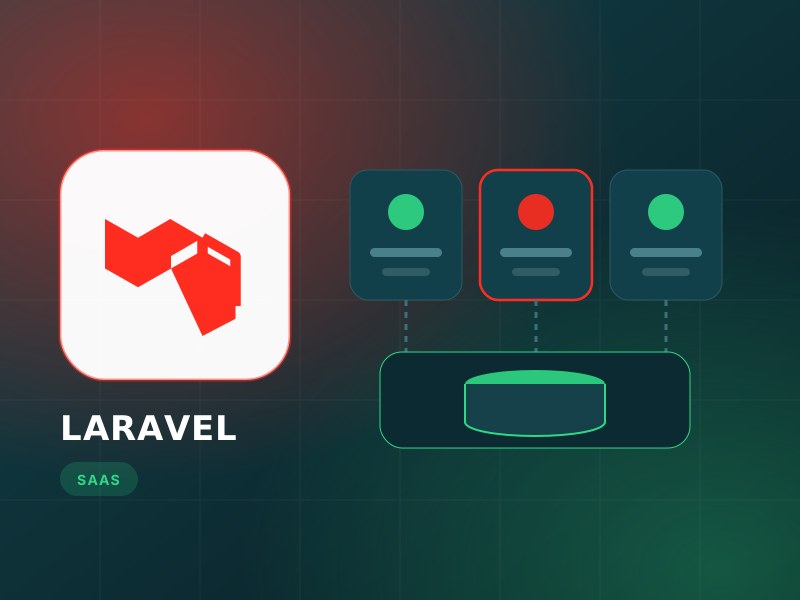
One codebase, many customers. A plain-English look at the main multi-tenancy options in Laravel and how to choose between them.
Most SaaS products serve many customers (tenants) from one application. The big design question is how to keep each customer's data separate.
Every table has a tenant_id. It is the simplest and cheapest approach and works well for most early-stage products. The risk is a forgotten filter exposing another customer's data, so global scopes are essential.
Each customer gets their own database. Isolation is stronger, backups and exports per customer are easy, and heavy customers cannot slow down others. It costs more to run and migrate.
Start shared, and move large or regulated customers to their own database later.
Packages such as stancl/tenancy and spatie/laravel-multitenancy handle the hard parts, so you do not reinvent them.
Pick the simplest model that meets your security needs, and design it in from the start, because changing it later is expensive. We help SaaS founders make this call before the first line of code.
Laravel gives your team a clear structure, built-in security and a huge ecosystem, so you launch faster and keep the code easy to change.
Read article
Plain PHP is fine for tiny scripts. Once your project has users, data and a team, a framework like Laravel saves time and prevents expensive mistakes.
Read article
A practical outline of authentication, validation and rate limiting for a Laravel API that mobile apps and partners can trust.
Read articleTell us what you want to build and we will reply within one business day.